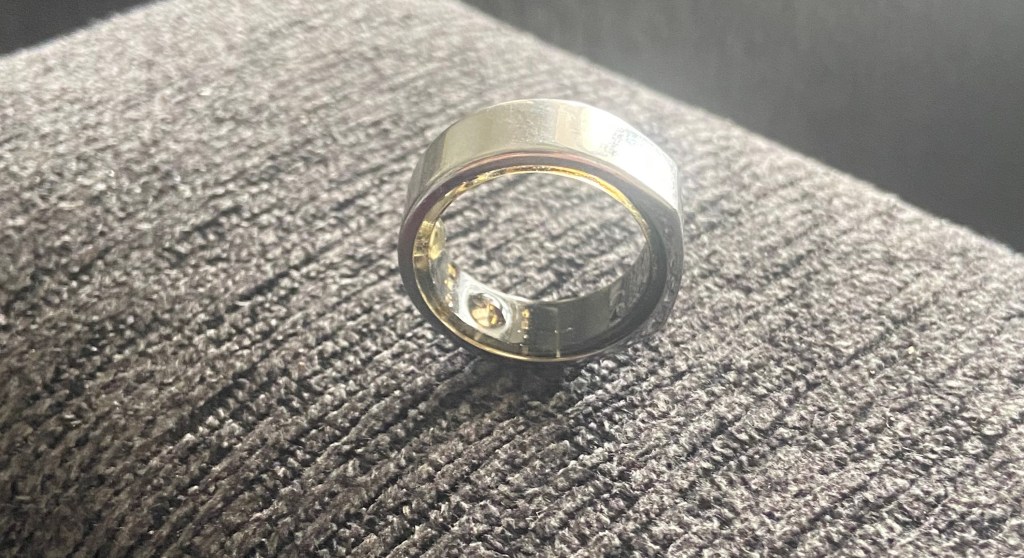
I’ve had an Oura Ring for the past three years and it has been an invaluable sleep and activity tracker.
Major pros
- Strong sleep tracking and accuracy
- Multiple independent validation studies find Oura among the most accurate consumer sleep trackers for sleep staging versus polysomnography, outperforming Apple Watch and Fitbit in four‑stage sleep classification and wake/deep sleep detection.
- It gives detailed metrics (sleep stages, timing, heart rate, HRV, temperature trends, SpO2 on newer models), which can help you spot patterns with alcohol, late workouts, illness, or stress.
- Readiness and recovery focus
- The readiness score pulls together sleep, HRV, resting heart rate, and activity to nudge you toward rest or more training, which many reviewers say genuinely changes their habits.
- Newer features add cumulative stress, pregnancy support, and health “panels,” pushing it beyond basic step counting into longitudinal health tracking.
- Form factor and comfort
- The ring form factor is very light, discreet, and more comfortable for sleep than a watch for many people, with multiple metal/finish options that pass as regular jewelry.
- It is waterproof and designed for 24/7 wear, and users often note that they mostly forget they’re wearing it.
- Battery life and app
- Battery typically lasts several days (around 3–5 depending on features like continuous SpO2), so you are not charging it daily.
- The app presents simple scores (sleep, readiness, activity) plus drill‑down charts and the ability to export or share reports with clinicians or coaches.
Major cons
- Cost and required subscription
- Hardware for the latest Oura Ring 4 runs roughly $349–$499 depending on finish, clearly in premium‑gadget territory.
- A membership of about $5.99 per month or $69.99 per year is required to unlock and keep full access to data and insights, which some reviewers feel is poor value on top of the device price.
- Activity tracking limitations
- Oura is not a full‑featured sports watch; it often infers workouts after the fact and asks you to confirm, and users report missed or mis‑timed activities, especially for things like strength training or short walks.
- You cannot actively “start” complex workouts the way you would on an Apple Watch or Garmin, so if your primary goal is detailed exercise metrics, this may disappoint.
- Data quirks and misclassifications
- Like other wearables, it sometimes logs quiet wakefulness (reading, watching TV) as sleep, or misses naps, which can make the sleep scores feel off.
- Some app charts and metrics are not intuitive for casual users, and a few reviewers mention software bugs or limited explanation for certain scores.
- Durability and comfort edge cases
- The metal ring can scratch, and weightlifting or activities with equipment can mark or damage it, so people often remove it for certain workouts.
- Sizing matters: if you get the wrong size, it can feel tight or rotate, which can affect comfort and potentially sensor performance.
When it’s a good buy
- You want deep, relatively accurate sleep, recovery, and readiness insights more than detailed GPS or interval workout tracking.
- You prefer a minimal form factor that you can wear day and night and don’t mind paying a subscription for evolving software features.
When you might skip it
- You care more about live workout features, GPS, or detailed sport analytics than about sleep and recovery scores (an Apple Watch, Garmin, or Whoop may fit better).
- You dislike ongoing subscriptions or want a one‑time purchase tracker; in that case, a more traditional fitness band or watch with no membership might be preferable.
Oura Ring v.s. Apple Watch
For sleep‑first tracking, Oura usually wins; for all‑around fitness and “do everything” features, Apple Watch is stronger.
Sleep tracking
- Accuracy
- A Brigham and Women’s Hospital study found Oura about 5% more accurate than Apple Watch for four‑stage sleep classification and clearly better at detecting deep sleep and wake.
- Reviews and clinicians generally rate Oura as more precise for sleep phases, while Apple’s sleep features are solid but more basic and can overestimate light and deep sleep.
- Comfort and overnight wear
- Oura’s tiny ring form factor and multi‑day battery make it easier to wear all night, every night, without worrying about a bright screen or daily charging.
- Apple Watch can feel bulky in bed for some people and typically needs a daily charge, which can conflict with overnight use unless you build a strict charging routine.
Fitness and activity tracking
- Workout detail
- Apple Watch offers live workout modes, GPS, heart‑rate zones, pace, splits, and integration with Fitness+, making it a true sport device for running, cycling, HIIT, and more.
- Oura auto‑detects workouts after the fact and often struggles with strength training or low‑intensity sessions; you get rough activity/load, not training‑grade metrics.
- Health metrics
- Apple Watch adds ECG, irregular rhythm alerts, fall detection, emergency calling, and more continuous on‑wrist heart‑rate monitoring during movement.
- Oura focuses on resting heart rate, HRV, temperature, SpO2, and readiness scores, which are great for recovery insights but less useful mid‑workout.
Battery, cost, and ecosystem
- Battery and charging
- Price and subscription
- Ecosystem and features
Which should you pick?
- Choose Oura Ring if:
- Sleep and recovery insights are your top priority, you want something you barely notice in bed, and you’re okay with a subscription.
- Choose Apple Watch if:
- You want strong fitness tracking plus everyday smartwatch features, are already in the Apple ecosystem, and can live with “good enough” sleep data and daily charging.
Oura Ring v.s. Whoop
For recovery‑first training, WHOOP is usually more aggressive and coaching‑oriented; Oura is more holistic and lifestyle‑friendly.
How each measures recovery
- Oura Ring
- Uses a 0–100 Readiness score that blends HRV, resting heart rate, sleep quality, sleep timing, and body temperature trends to tell you how “ready” you are for the day.
- Emphasizes long‑term patterns and overall well‑being, nudging you to balance stress, activity, and rest across weeks and months.
- Whoop
- Uses a color‑coded Recovery percentage (red/yellow/green) built from HRV, resting heart rate, sleep performance, and respiratory rate, updated each morning.
- Tightly links Recovery to a daily Strain target (0–21 scale), explicitly telling you how hard to push based on how recovered you are.
Coaching and day‑to‑day guidance
- Oura Ring
- Provides a morning Readiness score plus tags and trends, helping you see how alcohol, late nights, travel, or illness affect your recovery over time.
- Guidance is more “gentle advisor” than hard prescription; good if you want context and trends without feeling micromanaged by your data.
- Whoop
- The Recovery + Strain Coach loop gives very clear instructions: green = go hard, yellow = moderate, red = dial it back or focus on active recovery.
- Especially suited to athletes and serious trainees who want to periodize training volume and intensity around objective recovery signals.
Hardware, comfort, and wear experience
- Oura Ring
- Discreet ring that looks like jewelry, easy to wear 24/7, particularly comfortable for sleep.
- Better for people who dislike bands or don’t want their recovery tracker to look like a fitness device.
- Whoop
- Fabric wrist/arm band with no screen, worn like a minimalist watch or biceps strap.
- Often preferred by gym‑first users since it can sit out of the way under a wrist wrap or on the upper arm during lifting and sport.
Cost and subscription model
- Oura Ring
- Whoop
- Subscription‑first model: the band is essentially bundled with your membership, and the ongoing fee unlocks all recovery/strain features.
- Total cost over several years can exceed a single Oura Ring if you stay subscribed long‑term.
Which is better for recovery?
- Choose Whoop if:
- You’re training seriously (endurance, CrossFit, HIIT) and want strict, actionable recovery guidance tied to how hard you train each day.
- You value live heart rate, strain tracking, and a coaching‑style app more than aesthetics.
- Choose Oura Ring if:
- You care about recovery but also about comfort, sleep staging, and long‑horizon health trends, not just yesterday’s workout.
- You prefer a subtle form factor and a calmer, more holistic lens on stress, sickness, and lifestyle load.
 Sherin Shibu
Leave a comment