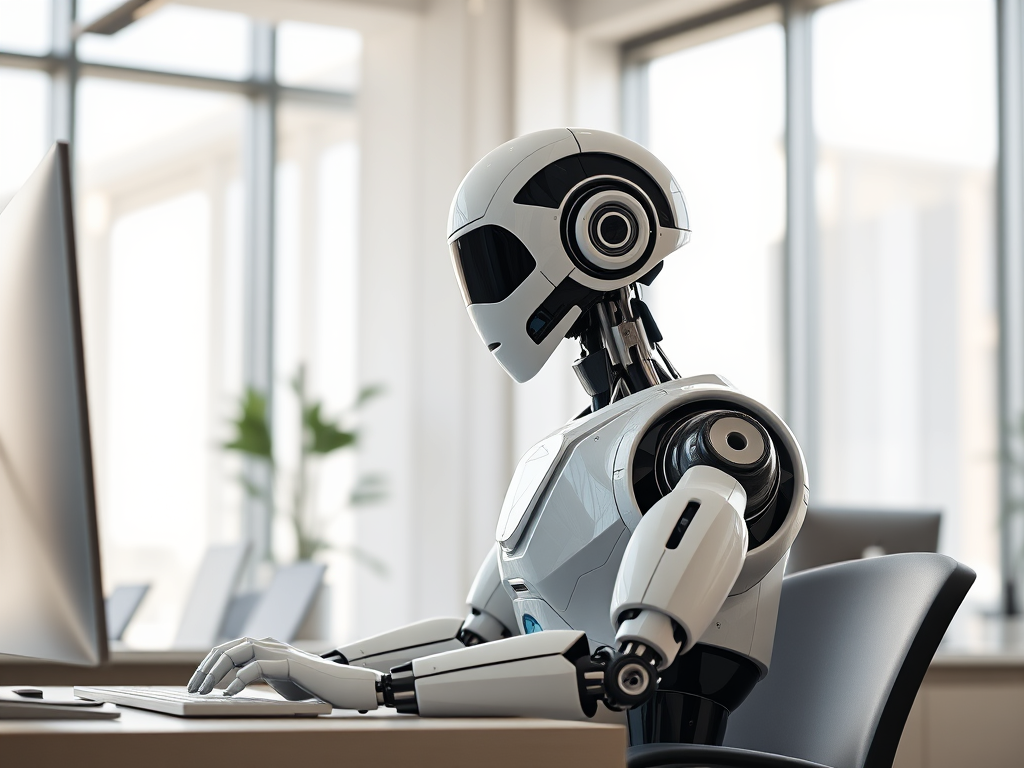
Workers are fixated on one big AI fear: losing their jobs. That risk is real in some fields, but it’s not the only, or even the most important, threat. The bigger danger is quieter: AI tools are capturing how you do your work—your shortcuts, your judgment, your institutional memory—and turning it into a reusable asset your employer owns, but you don’t.
From layoffs fear to power shift
For the past two years, the AI-at-work conversation has been about who gets automated and when. Call-center agents, copywriters, junior analysts and paralegals have all watched software creep into their workflows. Many are trying to “AI-proof” themselves by becoming the person who knows how to prompt, fine-tune or “drive” the tools.
But look at what’s actually happening inside companies. Workers are being asked to feed AI with their best email drafts, client responses, proposal templates, interview questions, and troubleshooting steps. Over time, that input becomes a rich internal model of “how we do things here”—everything from tone and brand voice to negotiation tactics and escalation paths. That’s where the real power shift is.
AI as a knowledge vacuum
Every time you use an internal chatbot to rewrite an email, summarize a meeting or suggest next steps, you are training it on your style, your choices, your judgment. Your company can then apply that captured know-how to hundreds or thousands of workers, including the next person hired into your role.
In the short term, this looks like productivity. A new rep can generate “on-brand” responses on day one. A junior consultant can pull a draft deck that reflects a decade of client work. A manager can ask, “How did we handle a situation like this before?” and get a detailed, AI-generated answer. The system becomes a kind of always-on, searchable version of the company’s collective brain.
The flip side: once that brain exists, any single employee’s bargaining power drops. If your employer has a detailed AI model of how you work, you’re no longer the only person who knows how to calm an angry customer, close a tricky deal or debug a recurring operations problem. You’ve effectively donated your playbook.
The risk: being indispensable… until you’re not
Historically, knowledge moat workers—people who “just know how things work”—were harder to lay off. Their value wasn’t captured in a manual or a CRM field; it lived in their heads. AI tools are flattening that moat. They’re turning tacit knowledge into explicit, queryable, shareable recipes.
That doesn’t instantly equal mass layoffs. Companies still need people who can exercise judgment, build relationships and handle edge cases. But it does change the calculus in subtle ways:
- It’s easier to offshore or replace a role when the logic of that role is captured in prompts, workflows and model weights.
- It’s easier to ramp up a revolving door of cheaper workers when the AI system can spoon-feed them “what a seasoned pro would do.”
- It’s easier to push back on raises when management can argue that the system, not the individual, now holds most of the secret sauce.
The fear isn’t just “AI will take my job.” It’s “AI will extract my expertise, then make me interchangeable.”
How workers can respond
You can’t opt out of this shift, but you can be more strategic about how you participate in it. A few practical moves:
- Own your learning curve. Document what you’re learning about AI tools in a way that’s portable—process notes, case studies, a portfolio of experiments you can talk about in interviews. Don’t let all the value flow one way, into the corporate model.
- Move up the value chain. The more your work is about judgment, prioritization, cross-functional coordination and managing humans, the harder it is to fully capture in prompts and training data.
- Be the person who shapes the system, not just feeds it. People who design workflows, choose tools and set guardrails hold more leverage than those who simply comply with “put this into the bot.” Steering how AI gets used is a career asset you can take elsewhere.
- Pay attention to policy. Ask basic questions: What data is the system storing? Who can see or reuse it? Is your name attached to outputs? Even if you can’t change the answers, knowing them helps you judge risk.
AI may or may not take your job. But it will almost certainly take your job’s know-how and put it somewhere you don’t control. The workers who do best in that world won’t be the ones who pretend the tools are a fad. They’ll be the ones who learn to work with AI—and just as importantly, to understand what it’s quietly learning from them.
 Sherin Shibu
Leave a comment